

Medicine is a lifelong vocation for most doctors, and one that brings meaning, fulfilment—and, let’s be honest—considerable stress. If you’ve been in practice for over a decade, chances are you’ve brushed up against burnout, whether you recognised it at the time or not.
In January 2025, the BMJ published a piece titled “Snapped and Overburdened – What Can Be Done for Doctors Facing Burnout?”. It spotlighted a powerful concept: the internal war that many doctors wage with themselves when they can’t deliver the quality of care they strive for. The result? Shame. Guilt. Anger. A gnawing sense of betrayal by the very system they serve.
NHS Pressures… and Private Practice Promises
The General Medical Council’s 2024 report showed that nearly a third of NHS doctors are routinely working beyond their rostered hours, with many reporting that their workload is unmanageable. Unsurprisingly, clinicians are increasingly scaling back their NHS hours. Private practice, with its promise of autonomy, appears to be the antidote.
But here’s the catch: private practice is a double-edged sword.
It offers independence, but also the potential to overextend. Doctors often take on too much, too fast—juggling NHS commitments with a growing private caseload. And without deliberate planning, those extra hours can quietly tip into overwhelm and eventual burnout.
What Does Burnout Actually Look Like?
Burnout doesn’t always arrive like a dramatic collapse. More often, it creeps in:
- Emotional exhaustion – Feeling drained and detached from your loved ones at the end of the day.
- Loss of empathy – Patients start to feel like problems to manage, not people to help.
- Survival mode – You dread Mondays and live for the weekends—just to recover.
- Irritability – The little things stop being enjoyable. You feel permanently ‘on edge’.
- Isolation – You don’t want to ‘burden’ others with how you’re feeling, so you bottle it up.
Sound familiar?

The Myth of "It’s Just for Now"
Many doctors, particularly those new to private practice, fall into a dangerous pattern: saying “yes” to everything. They dash from NHS clinics to private patients, grabbing a sandwich in the car and arriving just in time to run evening sessions that leave them finishing at 8:30pm or later.
This pace will cost you - either in clinical quality, personal health, or lost income from inefficiency. Without structured support, burnout isn’t a risk - it’s a certainty.
Every hour spent on admin is an hour you’re not billing, not recovering, and not growing your practice. It’s not just tiring—it’s costing you.
Why White Space Matters
Recovery doesn’t happen by accident—it has to be protected. That means ring-fencing time for rest, exercise, hobbies, and family. It means not giving up the gym session, the long dog walk, or the dinner out because you “just need to squeeze in one more patient.”
When you skip these restorative rituals, your nervous system stays in overdrive. You don’t just get tired—you become brittle, depleted, and vulnerable to crashing.
Hidden Burnout Trigger: Administrative Overload
Burnout isn’t just about patient care—it’s about everything else that weighs on your shoulders. The emails. The billing. The follow-up letters. The transcription software glitches. The endless list of things you can’t hand off because there’s no one there to take them on.
In the beginning, you might get away with DIY-ing your private practice admin. But as you scale from 5 to 15+ patients a week, inefficiencies snowball. That “slightly clunky” process becomes the equivalent of death by a thousand cuts—and you’re left wondering how your evenings vanished into spreadsheets and system logins.
When Freedom Feels Like a Trap
The irony? Many doctors enter private practice seeking more freedom—and end up with less. More hours. More responsibilities. More pressure. It’s not that the dream was flawed; it’s that the support structure never evolved alongside it.
The Role of Professional Support
Here’s where we come in. The good news is, you can ‘have your private practice cake’ (and eat it)..
We can’t change what happens in the consulting room. And we’re not here to rescue you from your NHS role (if you still have one). But we can relieve you of the burdens that don’t need to sit on your plate:
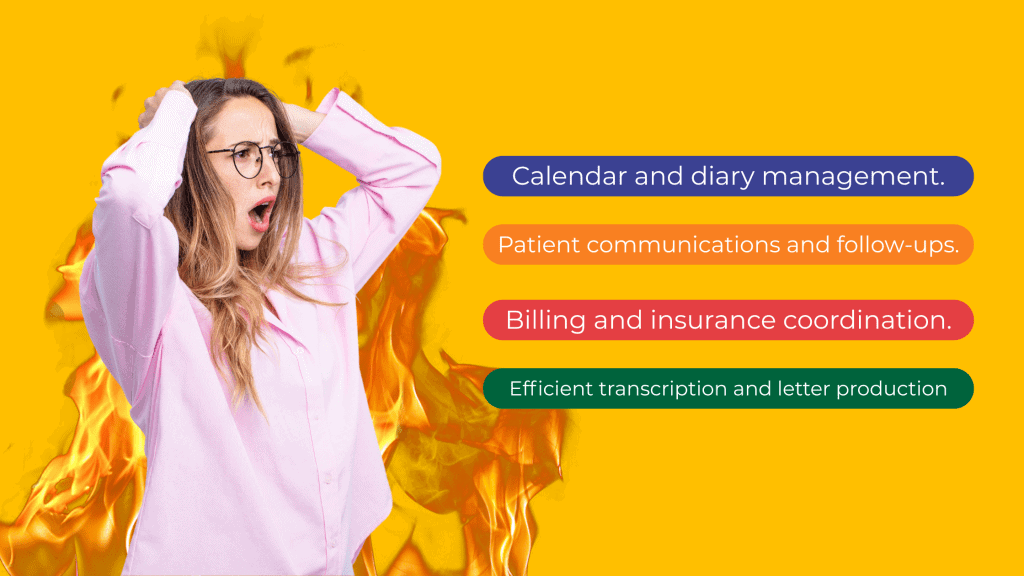
- Calendar and diary management.
- Patient communications and follow-ups.
- Billing and insurance coordination.
- Efficient transcription and letter production—with or without AI.
Most importantly, we’ll help you design a week that works for you—not one that constantly pushes you to breaking point.
The Power of a Medical PA… Plus a Life PA
Think of this as your support triangle:
- A brilliant Medical PA to streamline your clinical admin.
- A LifeSort PA to handle the time-stealing business and personal tasks that zap your energy.
- A reliable, proactive support system that ensures no detail is dropped and no email goes unanswered.
Together, they help you reclaim headspace, time, and joy—so you can refocus on what you do best.
Our PAs are rigorously vetted, ICO-registered, and trained to work within leading PMS tools like Semble and MidexPro. They don’t just lighten your load - they uphold your standards.”
Ready to Talk?
If your weeks are filled with late-night letter dictations and admin marathons, it’s time for a reset. Whether you’re already scaling back your NHS work or are trying to make private practice feel more sustainable, we’ll help you design a smarter way forward.
You didn’t go into medicine to be stressed out by admin, after all. You deserve support that works as hard as you do, and a wonderfully successful private practice.
Book a discovery call with MPM and let’s rebuild your week - smarter, calmer, and more profitable.
